
This press release was written and distributed by ATCC and originally appeared on ATCC.org.
ATCC, the world’s largest nonprofit biological resource center, today announced the opening of its Centennial Biomanufacturing Center (CBC), a national resource designed to accelerate the development of critical biological materials, models, and data to help organizations move from discovery to real-world impact.
The center will manufacture, characterize, authenticate, store, and distribute essential biomaterials to support biomedical product development, public health preparedness, and next-generation scientific research.
Located at ATCC’s headquarters, the CBC is expected to create up to 75 new full-time jobs and add important capacity to the BioHealth Capital Region, which ranks third nationally among U.S. biopharma clusters.
“ATCC is the trusted foundation for scientific discovery, providing the authenticated biological materials, standards, and expertise that researchers rely on,” said Ruth Cheng, PhD, president and CEO, ATCC. “This new center extends that legacy at a pivotal time, giving the nation a reliable domestic source of the materials needed to help our government, academic, and industry partners clear production bottlenecks, accelerate biomedical breakthroughs, and strengthen public health.”
Capacity to support large-scale initiatives
The CBC combines high-throughput manufacturing, scalable production, supply chain resilience, and surge capacity in a single facility. The center will produce well-characterized challenge materials, advanced model platforms, and essential reagents, while supporting drug screening and expanding genomic reference data for regulatory use. Together, these capabilities enable faster response to emerging scientific and national priorities.
Among the first programs the CBC will support are producing materials to help the National Institutes of Health (NIH) research and respond to disease outbreaks, as well as developing and testing human-relevant models, including lung and blood-brain barrier models, to advance infectious disease research for the National Institute of Allergy and Infectious Diseases (NIAID). These NAMs could help researchers better understand disease mechanisms and evaluate potential treatments while reducing reliance on traditional animal models.
In addition, the center will support U.S. Department of Agriculture (USDA) initiatives to advance research on therapeutics and vaccines targeting highly pathogenic avian influenza and strengthen biosecurity. As a cornerstone of the nation’s biological preparedness infrastructure, the CBC will also ensure access to the biological materials needed to support warfighters and develop medical countermeasures.
ATCC’s authenticated biomaterials, validated reference materials, and ISO 9001-certified quality management system provide researchers with a dependable foundation for reproducible results, helping organizations advance their work with greater confidence and support regulatory readiness. Secure handling procedures, cold-chain logistics, and biosafety compliance further protect material integrity throughout production and distribution.
“When public health threats emerge, the nation’s response depends on rapid access to trusted biological materials and the infrastructure to produce them at scale,” said Rebecca Bradford, MBA, senior vice president, ATCC Federal Solutions. “ATCC has supported federal programs for decades, and the CBC expands our ability to deliver the materials and expertise that those efforts demand, helping our partners respond to today’s challenges while preparing for those we haven’t yet encountered.”
The center represents an investment of more than $55 million by ATCC, supplemented by federal and state investments, including a C06 Research Facilities Construction Grant from NIH through its Office of Research Infrastructure Programs, a G20 Project grant from the NIAID to support research capabilities and pandemic preparedness efforts, and a grant from the Commonwealth’s Development Opportunity Fund administered by the Virginia Economic Development Partnership (VEDP).
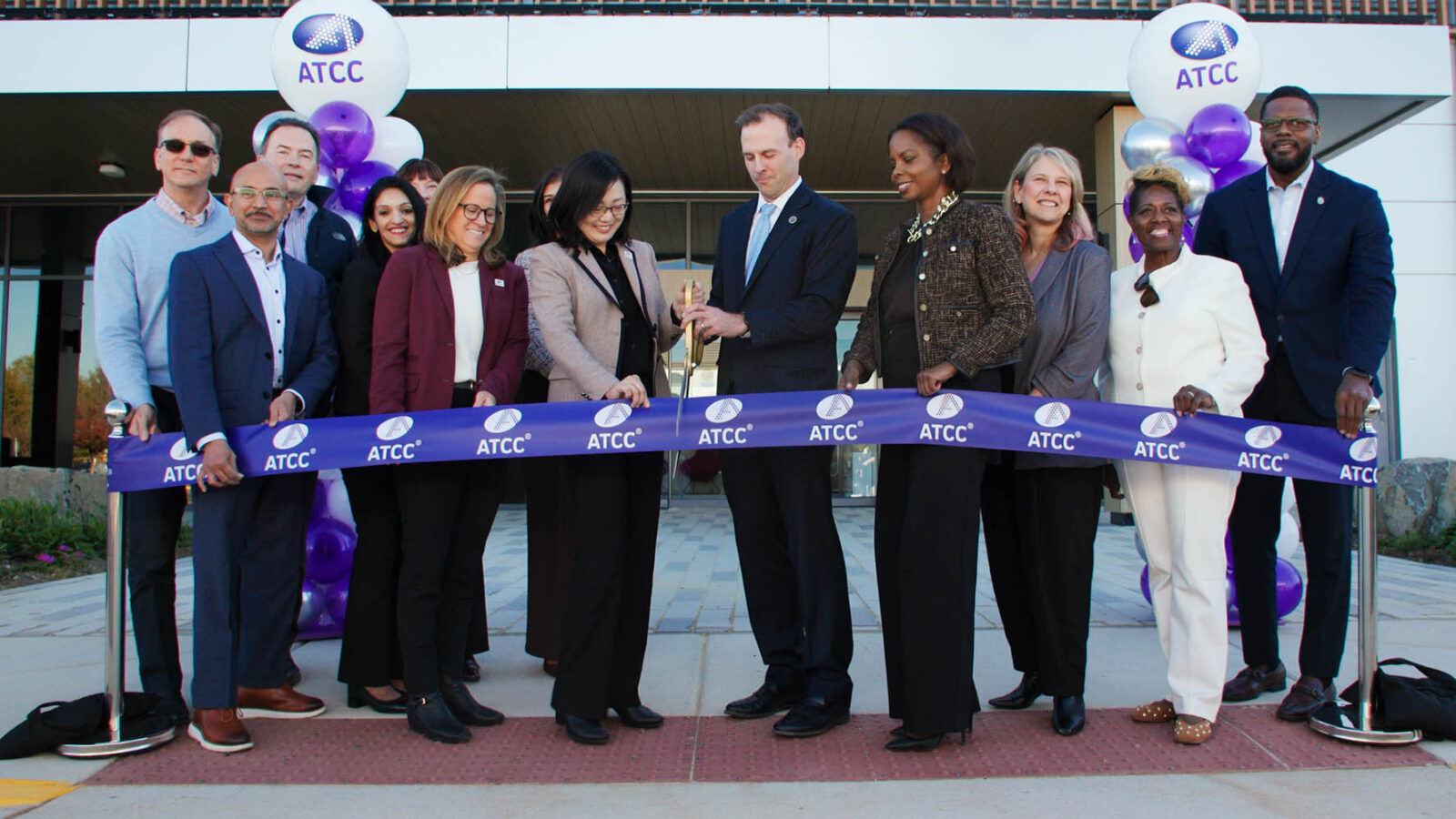
ATCC marked the opening with a ribbon-cutting ceremony featuring remarks from Virginia Deputy Secretary of Commerce and Trade Stewart Ackerly, Prince William County Chair At-Large Deshundra Jefferson, Cheng, and Bradford.
“When ATCC chose Prince William County in 1998, it invested in the potential of this community,” said Jefferson. “Nearly 30 years later, we can see the return on that investment in the jobs created, the scientists attracted, the partnerships built, and an entire innovation district that has grown around a shared commitment to discovery. Today, we’re celebrating a new building, but we’re also celebrating the people and partnerships that made it possible.”
